Post-AI Human Adaptation: A Strategic Transition Blueprint
"The rapid advancement of generative artificial intelligence has initiated a structural shift in macroeconomic architecture, severing the historic connection between human labor and capital distribution." — Sovereign Energy Division Briefing, Q3 2026
00. Transmission Header#
CLASSIFICATION : Tresslers Group Intelligence // Sovereign Energy Division
DOMAIN         : Socioeconomics / Agentic Infrastructure / Cognitive Science / Evolutionary Policy
STATUS         : Active Strategic Intelligence — SOP v2.0 Validated
DATE           : 2026.07.13
LAST_SYNC      : 2026.07.13
PROTOCOL       : ACP / BCI-SDG / ESG-CEQ / EEDC-Double-Dignity
AGENTIC_DELTA  : 89% (Macroeconomic Structural Transition Probability)
ALERT LEVEL    : Strategic — Cognitive labor contraction active; transitional safety structures required
01. Socioeconomics and the Post-Labor Economy#
Redefining Wealth Distribution and Means of Production Ownership#
The rapid advancement of generative artificial intelligence has initiated a structural shift in macroeconomic architecture, severing the historic connection between human labor and capital distribution. As labor's share of national income continues its long-term decline, accelerated by algorithmic substitution, traditional payroll and income tax bases are shrinking. In a post-labor economy, where wealth generation concentrates within closed, capital-intensive infrastructure, the traditional work ethic no longer functions as an effective mechanism for equitable capital allocation. This transformation requires a fundamental re-conceptualization of the "means of intelligence production"—encompassing the physical and digital stack of compute, foundation models, and training datasets.
A central challenge in this transition is preventing a descent into digital feudalism, where hyper-centralized corporate techno-monopolies operate as shadow governments, renting access to intelligence commons back to the public. Proposed hybrid economic architectures seek to address this by establishing public equity stakes in leading foundation models. This approach, exemplified by legislative plans to impose structural levies on frontier AI developers, seeks to place a significant portion of corporate equity into a state-backed sovereign wealth fund modeled on Alaska’s Permanent Fund. The compounding returns of automated intelligence are thus captured as a public commons, distributing a "sovereign AI dividend" directly to citizens.
To prevent these dividends from degenerating into state paternalism or corporate dependency, bottom-up institutional models such as "data trusts" and "data cooperatives" are designed to govern the underlying factor of production: training data. Research indicates that while foundation models have ingested a vast portion of the public internet, they utilize less than 0.01% of the world's available data. The remaining 99% exists as "dark data" trapped behind proprietary databases, login walls, and domain-specific corpora. As AI laboratories exhaust public data and turn to these proprietary dark data sources, a structured data economy has emerged, characterized by highly fragmented, bilateral, and bespoke pricing arrangements.
Table 1: Data Pricing Mechanism Matrix#
| Data Pricing Mechanism | Economic Characterization | Transactional Reference | Structural Vulnerabilities |
|---|---|---|---|
| Per-Unit Licensing | Fixed pricing per discrete informational asset; prevalent for highly structured and aggregated creative works. | Licensing books at 1–$4 per minute. | High administrative friction; easily bypassed by synthetic data generation; excludes original creators from downstream model appreciation. |
| Aggregate Licensing | Fixed-fee, time-limited access to curated corpora or real-time data feeds; common in enterprise-level contracts. | Enterprise agreements between frontier labs and media conglomerates, frequently paid in hybrid cash and computational API credits. | Entrenches platform lock-in through computational credit dependency; concentrates market power. |
| Service-Based Pricing | Bundling raw data with high-volume human transformation, annotation, and alignment labor. | High-frequency interaction platforms leveraging global crowd-worker networks to label and clean training sets. | Exploitative labor dynamics in low-wage jurisdictions; quality control bottlenecks. |
| Commissioning | Upfront capital funding for the bespoke creation and collection of highly specialized target datasets. | Specialized expert networks generating domain-specific data under a consulting framework, yielding high annualized run rates. | Capital-intensive; difficult to scale; restricted to entities with significant venture backing. |
| Open Commons | Publicly accessible datasets funded via state grants, academic consortia, or regulatory open-access mandates. | Non-commercial repositories, public satellite feeds, protein data banks, and open web crawls. | Sustained underfunding; vulnerability to commercial exploitation without reciprocal contribution. |
To counter these market failures, bottom-up data trusts—as conceptualized by researchers Delacroix and Lawrence—enable collective bargaining by pooling individual data rights into fiduciary structures that negotiate directly with model developers. By treating data as tradable capital, as proposed by Alex Pentland, these cooperatives ensure that creators participate directly in model ownership and revenue sharing. This prevents hyper-centralization and preserves individual agency within a competitive, distributed AI mesh.
02. Navigating the Volatile Transitional Decades: The "Messy Middle"#
Societies must navigate a highly unstable 10-to-30-year transition period, known as the "Messy Middle," characterized by rapid algorithmic displacement of labor before stable post-labor distribution mechanisms are established. During this volatile interval, relying solely on direct cash handouts like Universal Basic Income (UBI) is increasingly recognized as insufficient. Critics argue that thin, unconditional cash distributions fail to replace the psychological structure, social contribution, and dignity historically provided by work, while doing little to protect vulnerable communities from economic shock.
In response, the Economic Dignity Lab has formulated the "Economic Dignity Compact for the AI Age". This framework rejects passive transfer models, instead proposing a state-backed, AI-funded shift toward a "Double-Dignity Care Economy". This model redirects the productivity gains of automation to fund millions of human-centric roles in healthcare, mental health support, and community infrastructure.
The concept of a double-dignity job is based on a mutual social contract. Human workers receive dignified compensation—including living wages, complete benefits, paid leave, workplace voice, and clear career paths. In return, they provide essential, non-routine, interpersonal care that preserves the dignity of recipients, such as individuals with intellectual and developmental disabilities (IDDs), aging populations, and those recovering from trauma or addiction.
This approach generates a high societal return on investment (ROI). Upgrading the pay and professional status of care roles directly addresses the high employee turnover rates that compromise quality of care; for example, Direct Support Professionals (DSPs) in the disability sector currently experience a 40% annual turnover rate due to poor wages. Upgrading these positions reduces downstream public costs associated with hospitalization, institutionalization, and long-term unemployment.
To operationalize this transition, the Economic Dignity Compact proposes:
- ▸The ARPA-AI Jobs Initiative: A federal research and funding body dedicated to developing and deploying AI integrations that complement and enhance human labor rather than replacing it, offering implementation grants to local governments and enterprise firms.
- ▸A Targeted Universal Economic Dignity Floor: Directly funding specific gaps in the social safety net—such as early childhood education, paid family leave, and universal mental health access—rather than distributing uncoordinated cash payments to all citizens regardless of need.
- ▸A National Commitment to Place-Based Adjustment: Directing structural transition funds specifically to devastated factory towns and marginalized communities, ensuring that displaced workers are transitioned into meaningful public contribution roles.
03. The Post-Income-Tax State and Fiscal Re-Design#
As automation reduces traditional payroll and corporate tax revenues, nation-states must redesign their fiscal architectures to fund governance and public services. Proponents of AI-specific taxation have introduced several models, yet public finance theory warns that poorly designed interventions can be counterproductive.
For instance, economists Daron Acemoglu, Andrea Manera, and Pascual Restrepo have documented a significant distortion in the current tax code, which taxes human labor at an effective rate of approximately 25%, while capital equipment and software are taxed at rates closer to 5%. This disparity creates a tax-driven incentive for firms to replace human workers with automated systems, even when human labor remains more socially or economically efficient.
Table 2: Fiscal Mechanisms and Economic Distortions#
| Fiscal Mechanism | Target Area | Implementation Challenges | Economic Distortions & Risks |
|---|---|---|---|
| Compute / FLOP Levy | Floating point operations, GPU-hours, or data center energy inputs. | Extreme difficulty in monitoring global, distributed high-performance computing infrastructure. | Acts as a tax on intermediate inputs, causing cascading costs down the supply chain and disincentivizing research and development. |
| Token Tax | Downstream model outputs metered at the API billing layer. | Complex tax tracking across open-source and locally run models. | Increases the costs of downstream productivity tools, disproportionately impacting small businesses. |
| Robot Tax | Capital assets that directly substitute for human tasks. | Defining what constitutes a "robot" or "replacement event" in a software-driven environment. | Penalizes productivity-enhancing technological adoption, lowering overall economic competitiveness. |
| Supernormal Profits Tax | Corporate rents and monopoly profits generated by automated systems. | Capital flight to lower-tax jurisdictions and offshore tax havens. | Discourages capital investment if thresholds are poorly calibrated. |
| Value-Added Consumption Tax | Final consumption of automated goods and services. | Regression of tax burden on lower-income populations. | Assumes sustained consumer demand and purchasing power in a high-unemployment environment. |
These dynamics suggest that direct taxes on computational inputs (such as FLOP or compute levies) are highly inefficient. Because computation serves as an intermediate input for nearly all downstream digital applications, taxing compute pyramids costs throughout the economy, reducing total output.
Furthermore, because computational capital is highly mobile, unilateral compute taxes encourage developers to relocate to lower-tax jurisdictions, undermining national technological sovereignty. Public finance analysts suggest that a more efficient approach is to allow firms to utilize computational inputs to maximize efficiency, and subsequently tax their supernormal profits and corporate capital gains, redirecting those revenues into public infrastructure and care programs.
04. How the Agentic Disruption Breaks Historical Precedents#
The current shift to agentic artificial intelligence differs fundamentally from previous industrial and digital revolutions. During the Industrial Revolution, mechanization automated manual tasks, which lowered production costs, stimulated consumer demand, and created high-wage opportunities in the service and manufacturing sectors. Similarly, the Digital Revolution automated routine information processing while increasing the demand for non-routine cognitive and creative workers.
The agentic AI transition, however, targets non-routine cognitive, analytical, and creative tasks directly. When software can generate, execute, and self-correct complex workflows at zero marginal cost, the economic system undergoes a structural contraction in labor demand.
Current sectoral patterns reveal that creative, analytical, and technical roles are experiencing direct displacement. This dynamic introduces a performance paradox: while AI integration provides immediate, short-term productivity boosts, it risks eroding the entry-level positions where human workers traditionally acquire domain expertise, threatening a permanent contraction of the cognitive labor market.
05. Trustless Safety Nets and Autonomous Agentic Infrastructure#
As software agents become the primary users of both physical and digital infrastructure, they require decentralized protocol layers to transact securely without human intervention. The emerging machine-to-machine economy relies on the three modular layers of the Agentic Commerce Protocol (ACP): Identity, Authorization, and Settlement.
The Identity Layer verifies the operator, capability, and performance history of autonomous systems. Under the ERC-8004 "Trustless Agents" standard, agents are registered as unique, transferable ERC-721 tokens with metadata resolving to standardized JSON files. These files outline the agent’s supported endpoints, communication protocols (e.g., Model Context Protocol), and its designated payment wallet (agentWallet) verified through cryptographic signatures.
To facilitate trust in untrusted environments, the ERC-8004 registry includes:
- ▸The Reputation Registry: A standardized, on-chain interface where clients submit feedback (e.g., uptime, latency, and transaction accuracy) via signed fixed-point values, allowing decentralized indexes to filter out malicious or failing agents.
- ▸The Validation Registry: A framework for recording independent, progressive verifications (such as TEE attestations, zkML proofs, or re-execution checks) to validate an agent's work before high-value settlements.
The Authorization Layer defines spending parameters, giving agents operational autonomy while protecting the owner's capital. This is achieved on-chain via ERC-4337 smart wallets, where session keys restrict an agent to specific smart contracts, maximum gas spending limits, and strict expiration times.
In HTTP-native environments, authorization is managed through the x402 protocol, which utilizes the reserved HTTP 402 "Payment Required" status code to coordinate microtransactions. The x402 protocol operates through a 4-step handshake:
- ▸Initial Request: The agent queries a protected API endpoint (e.g.,
GET /v1/summarize). The resource server returns an HTTP 402 response containing a JSON payload with structured payment requirements (blockchain, target token, recipient wallet, and nonce). - ▸Local Signing: The agent constructs and signs a gasless EIP-3009
authorizeTransfermessage locally using its private key, avoiding gas fees on the source chain. - ▸Execution Retry: The agent resends the HTTP request, appending an
X-PAYMENTheader that contains the base64-encoded signed transfer authorization. - ▸Settlement and Delivery: The resource server validates the signature and submits it to an on-chain facilitator (such as Coinbase Commerce). The facilitator covers the gas, broadcasts the transaction to a fast settlement network, and the server returns a 200 OK response with the requested API resource.
The Settlement Layer executes cross-chain transfers with minimal latency and high capital efficiency. Stablecoins function as the default currency for this machine economy, supported by Circle's Cross-Chain Transfer Protocol (CCTP).
Unlike legacy lock-and-mint bridges that create wrapped tokens and introduce smart contract vulnerabilities, CCTP operates through a native burn-and-mint process, moving USDC natively 1:1 across supported networks. The canonical CCTP V2 standard integrates Standard Transfer, Fast Transfer, and programmable execution "Hooks" that trigger automated smart contract actions on the destination chain immediately after minting.
To manage cross-chain routing without manual bridging code, the ERC-7683 standard defines a resolver-centric model for cross-chain intents. Under ERC-7683, an agent's transaction intent is formatted as an opaque, bytestring payload decoded off-chain via a trusted resolver contract. The order is structured as an acyclic list of steps, variables, and payments:
- ▸Steps: Contract calls detailing target addresses, selectors, and attributes (such as
SpendsERC20orTimingBounds). - ▸Variables: Placeholders assigned by solvers, such as
PaymentRecipientorWitnessvalues. - ▸Payments: Token payouts triggered upon the completion of specific steps.
Independent solver pools compete to fulfill these intents on-chain, utilizing gas abstraction mechanisms (like Permit3) to settle the transaction atomically. This ensures that if any step of the multi-chain sequence fails, the transaction reverts to its initial state, preventing partial-execution errors.
To interact with this infrastructure, agents rely on specialized wallet architectures. MetaMask's Agent Wallet implements "Guard Mode," which enforces strict spend limits, protocol allowlists, and mandatory Push/SMS 2FA escalations, alongside "Beast Mode," which runs a continuous security pipeline (Transaction Shield threat scanning via Blockaid and Smart Transactions MEV protection) to execute rapid, high-frequency transactions safely.
In institutional settings, Cobo's Agentic Wallet uses Multi-Party Computation (MPC) to split signing keys between the agent, the human administrator, and the platform. Cobo's "Pact" system enforces a structured agreement framework, requiring the agent to articulate its execution plan, budget limits, and completion criteria, while deploying a "Denial → Structured Reason → Self-Correct" loop to programmatically repair and retry failed transactions without human intervention.
06. Psychology and the Architecture of Meaning#
Identity Decoupled from Professional Labor#
For centuries, human identity and self-worth have been tied to economic contribution, with the question "what do you do for a living?" serving as a primary metric of social status. The obsolescence of routine professional labor threatens to destabilize this framework, requiring new cultural narratives to support psychological well-being in a post-labor society.
Historically, periods of sudden economic disruption have led to declines in mental health, even when individuals remained financially secure. This indicates that employment provides essential non-monetary benefits: time structure, shared social goals, and a sense of personal agency.
As these traditional workplace structures fade, positional value is shifting toward the authentic, the unmediated, and the raw biological presence. The "Authenticity Movement" represents a cultural turn against hyper-curated, algorithmically optimized digital environments.
By rejecting performative digital interactions, individuals are re-centering their identity around intentional craftsmanship, physical making, live sports, and face-to-face communal engagements. In this landscape, personal fulfillment is derived not from market utility, but from active participation in unmediated human experiences.
The Scarcity of Struggle and the Cognitive Fitness Industry#
The systematic removal of cognitive and mechanical friction from daily life introduces unexpected psychological vulnerabilities. The human brain is a complex, adaptive, and inherently "antifragile" system that requires environmental challenges and stressors to configure its cognitive structures properly.
When conversational AI chatbots and predictive algorithms preemptively satisfy every intellectual, communicative, and emotional need, the brain is deprived of the cognitive effort necessary to maintain executive function. This lack of cognitive challenge can lead to "AI-chatbot induced cognitive atrophy" (AICICA).
Clinical evaluations indicate that excessive dependence on AI systems is associated with shortened attention spans, mental exhaustion, cognitive overload, and a reduced capacity for critical thinking and independent decision-making.
The developmental impact is evident in educational environments. Randomized controlled trials demonstrate a clear "performance paradox": while students utilizing generative AI tools for problem-solving show short-term performance gains, the removal of the tool reveals a severe decline in independent problem-solving capacity compared to unassisted cohorts.
This "learning illusion" occurs because frictionless, automated answers allow users to bypass the cognitive effort required to encode long-term memory. However, research also reveals a "digital threshold effect" in older populations. Meta-analyses show that crossing the threshold into active digital engagement—regardless of daily duration—is associated with a 58% lower odds of cognitive impairment and a 26% reduced risk of cognitive decline over time.
This suggests that technology can build a "technological reserve" when it is structured to invite active learning, problem-solving, and adaptability, rather than passive consumption.
To harness these protective dynamics, a specialized "Cognitive Fitness" industry has developed to design and sell beneficial difficulty, stress inoculation, and voluntary friction. Drawing on the principles of cognitive and social hormesis—which posit that controlled exposure to stressors builds psychological and neural resilience—this sector structures systematic training programs.
By prioritizing the six pillars of cognitive fitness—aerobic physical exercise (stimulating brain-derived neurotrophic factor, or BDNF), novel mental stimulation, targeted nutrition, restorative sleep, stress management, and complex social connection—this coaching framework treats resilience as an active, trainable process.
To assess cognitive adaptability under pressure, clinical practitioners utilize simulation-based Virtual Performance Assessments (VPAs). By analyzing log files, completion trajectories, and psychophysiological markers (such as skin conductance and autonomic startle habituation) under acute simulated stressors, researchers categorize human adaptation into four distinct pathways.
- ▸Thriving: Demonstrating a rapid rate of positive adaptation, where the individual actively reorganizes their cognitive strategies to perform at a higher level post-stressor.
- ▸Recovery: Experiencing a transient decline in performance followed by a prompt, self-directed return to baseline functioning.
- ▸Surviving: Maintaining baseline performance with high cognitive effort, accompanied by high mental exhaustion and attentional narrowing.
- ▸Succumbing: Demonstrating a collapse in decision-making and problem-solving capacity, leading to learned helplessness and algorithmic dependency.
Pluralistic Meaning Ecosystems#
Adaptation to automated abundance is not uniform, but varies significantly across neurotypes, cultures, generations, and personality structures. Individuals with high baseline drive and a strong need for achievement must construct structured, self-imposed challenges to maintain cognitive and psychological health.
In contrast, other populations may find fulfillment in the restoration of leisure, communal connectivity, and artistic exploration. Building resilient communities requires rejecting one-size-fits-all institutional designs.
Instead, societies must foster pluralistic "meaning ecosystems" that support diverse pathways to self-efficacy. This ensures that personal sovereignty, agency, and accountability are maintained, whether an individual pursues high-intensity intellectual mastery or community care.
07. Sociology and Community Re-Alignment#
New Tribalisms and Secular Third Places#
The collapse of the traditional 9-to-5 workplace removes a primary source of daily structure, social networking, and shared identity. To replace these lost networks, societies are seeing the emergence of new social structures, secular rituals, and communal third places.
These spaces are designed around shared values, physical activities, and collective contribution, such as localized Maker spaces, athletic clubs, and community-supported agriculture (CSA) networks. By establishing rhythmic social rituals—such as weekly communal physical challenges, collaborative building projects, and shared meals—these third places provide the social connection and shared goals historically supplied by the workplace.
The Geography of Post-Job Abundance and Intentional Co-living#
The decoupling of economic production from physical location has altered global migration and real estate markets. When physical proximity to urban financial and intellectual hubs is no longer necessary, the justification for high-density, high-cost urbanization decreases.
This shift is fueling a decentralized rural revival, driven by the establishment of "plug-in, adaptable co-living developments" and "complete communities". Complete communities organize spatial layout to place all daily necessities—including residential housing, localized commerce, education, preventative healthcare, and recreation—within walkable, 15-minute proximity.
This movement represents a modern, high-tech evolution of historic counterculture migration. Rather than isolating themselves, modern migrants utilize shared spaces and shared physical facilities to reduce living expenses and promote intergenerational integration. This structural approach draws on historical, egalitarian rural experiments, such as Mushanokōji Saneatsu’s Atarashiki Mura (New Village, established in Japan in 1918) and Nishida Tenkō's Ittōen (established in 1913).
In these historical models, members pooled resources to guarantee housing, clothing, food, education, and healthcare for all, while combining manual labor with creative pursuits to resist the dehumanizing forces of rapid modernization. In the post-labor era, this synthesis of physical labor and artistic creation is revived, supported by decentralized renewable energy grids, localized automated agriculture, and community-managed production commons.
Additionally, the expansion of Protected and Conserved Areas (PCAs)—targeting 30% global terrestrial and marine coverage by 2030—is reshaping rural settlement dynamics. While PCAs provide essential ecosystem services, the economic burdens of conservation often fall on local populations.
Integrating complete, co-living communities within or near PCAs addresses this imbalance. By aligning local development with ecological preservation, these communities create sustainable micro-economies focused on ecological restoration, high-value ecotourism, and low-impact resource management.
Individual Sovereignty under Algorithmic Nudging#
Ubiquitous artificial intelligence systems, optimized for seamless interaction, exert a form of "silent governance" and "subjectless power" over daily life. By analyzing real-time behavioral data, these platforms deploy predictive, personalized nudges that satisfy physical and emotional needs before they enter conscious awareness.
Under persistent algorithmic guidance, the human capacity for critical thought is suppressed, replaced by a curated echo chamber that serves biased, engagement-maximizing content. This dynamic risks turning individuals into passive consumers, relinquishing self-determination for convenience.
Preserving individual and collective sovereignty requires embedding legibility and intentional friction back into interface designs. This involves the implementation of "sovereignty firewalls"—user-controlled protocols that expose the underlying logic of algorithmic recommendations, offer explicit configuration over nudging thresholds, and allow users to opt out of predictive delivery systems to preserve the cognitive benefits of serendipity and self-directed choice.
Stratification and the Prestige of the Offline#
As material scarcity declines due to automated abundance, social stratification is shifting away from traditional wealth accumulation toward new markers of distinction. In this landscape, inequality is expressed through differential AI literacy, varying access to advanced cognitive augmentation, and—paradoxically—the luxury status of digital disconnection.
The "Analog 2026" paradigm represents a significant shift in social signaling. In an environment where the lower classes are saturated with low-cost, algorithmically generated digital experiences and AI companionship, the ability to remain offline emerges as a premium status symbol.
The adoption of basic feature phones ("dumb phones"), participation in face-to-face reading clubs (such as New York's Luddite Club), and the usage of physical film cameras and paper books are marketed as elite signifiers of self-discipline, financial security, and cognitive independence. Exclusivity is no longer signaled by constant connectivity, but by the luxury of being unreachable, establishing a clear social divide between those captured by algorithmic attention loops and those capable of opting out.
08. Technology, Evolution, and Cognitive Augmentation#
Asymmetric Evolutionary Tiers and Neuro-Equity#
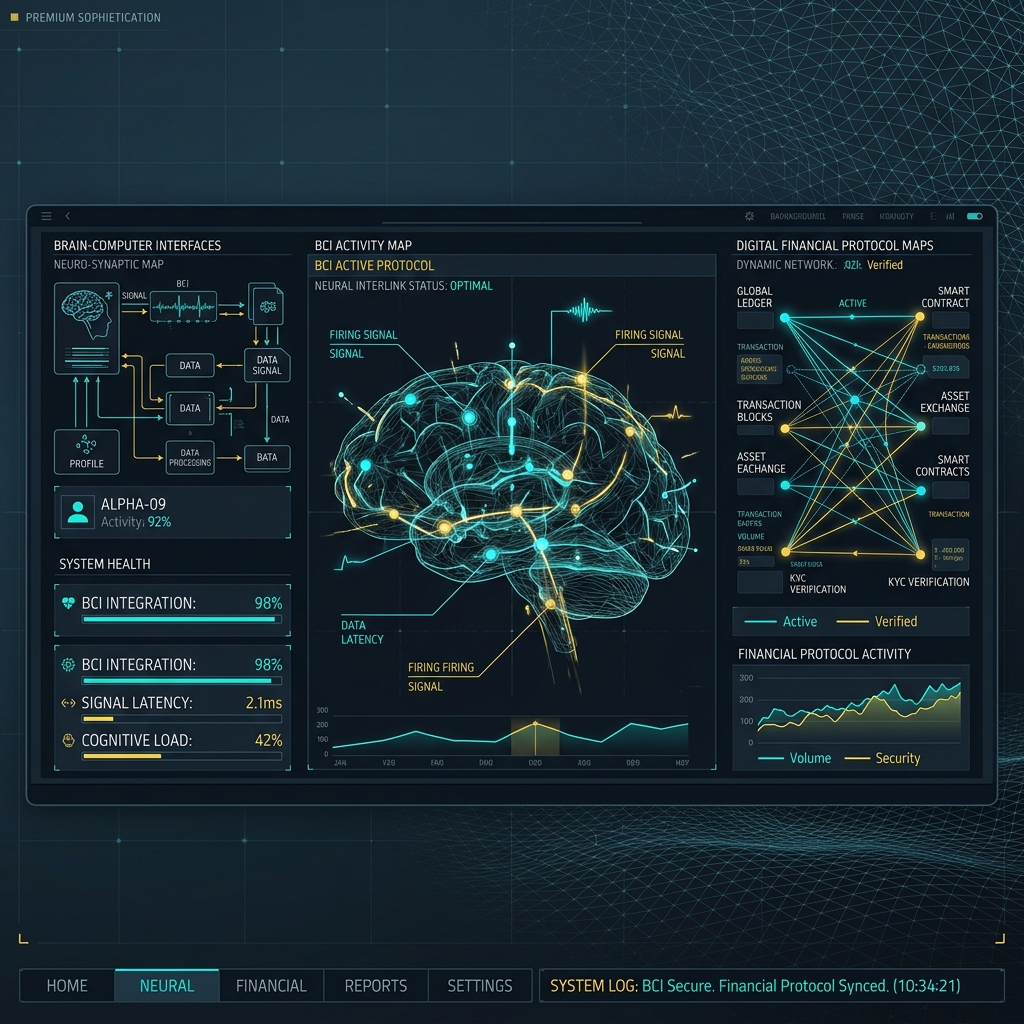
The rapid development of Brain-Computer Interfaces (BCIs) and cognitive augmentation technologies raises profound ethical and evolutionary concerns. Historically, organizational systems operated on the assumption that human cognitive capacity is a biological constant.
Bidirectional BCIs, which establish direct information exchanges between neural networks and digital systems, dismantle this assumption by enabling real-time neural feedback and AI-driven optimization. Projections indicate that by 2030, up to 30% of knowledge workers will rely on BCI interfaces simply to remain competitive in high-speed, AI-augmented environments.
This shift is driving a rapidly growing neurotech liability and BCI insurance market. As academic medical centers and private hospital systems scale BCI implantations for both therapeutic restoration and industrial cognitive enhancement, insurers are facing complex, combination product liabilities. These include product liability for physical implant complications, professional liability for neuro-rehabilitation errors, and cyber liability for the interception or manipulation of raw neural data.
The asymmetric adoption of these technologies introduces the risk of creating permanent, biological evolutionary castes. If invasive neural implants and advanced cognitive enhancers are accessible only to high-net-worth elites, the gap between augmented and unaugmented minds will transition from a socioeconomic disparity to an evolutionary divide.
To align with UN Sustainable Development Goals 4 (inclusive education) and 10 (reduced inequalities), organizations must establish "cognitive equity protocols" and "neuro-mediation policies". These frameworks require:
- ▸Sovereignty over Neural Data: Ensuring absolute individual ownership of raw neural signals and cognitive observation data, protecting workers from invasive workplace monitoring and algorithmic manipulation.
- ▸Subsidized Augmentation Programs: Creating public programs to ensure equitable, subsidized access to non-invasive and bidirectional neural interfaces across all organizational levels, preventing the formation of cognitive elites.
- ▸Preservation of Cognitive Autonomy: Establishing strict legal protections for the voluntary adoption of cognitive enhancements, guaranteeing robust, non-discriminatory alternative career pathways for individuals who choose to remain unaugmented.
To operationalize these requirements within enterprise structures, planners utilize a standardized, four-stage integration framework:
Table 3: BCI Integration Stage Framework#
| BCI Integration Stage | Focus Area | Structural Implementation | Compliance & SDG Targets |
|---|---|---|---|
| 1. Cognitive Baseline Profiling | Ethical evaluation of worker readiness and neuroplasticity. | Assessing the viability of non-invasive vs. invasive interfaces while establishing neuroprivacy firewalls. | SDG 4: Ensuring baseline cognitive assessments are free from bias and demographic discrimination. |
| 2. Collaborative Neuro-Learning | Developing BCI-integrated learning protocols. | Forming hybrid human-AI-BCI teams that utilize real-time neural feedback to optimize skill acquisition. | SDG 10: Sharing learning optimization tools across all workers, regardless of starting cognitive profiles. |
| 3. Oversight & Equity Integration | Enforcing cognitive equality and data protection protocols. | Running continuous neuroprivacy monitoring systems and providing alternative career pathways for unaugmented workers. | SDG 10: Eliminating workplace discrimination based on BCI enhancement status or refusal. |
| 4. Phased BCI Roadmapping | Structured scaling of neurotechnology. | Transitioning safely from non-invasive neurofeedback to bidirectional interfaces as technology matures. | SDG 4 & 10: Fostering inclusive, neurologically enhanced work environments. |
09. Cultivating Meta-Skills and Antifragile Minds#
Educational systems must undergo a fundamental paradigm shift away from the transmission of static, domain-specific knowledge toward the cultivation of "meta-adaptability" and "youth depth development". In a world where specialized technical skills are rapidly automated, the primary driver of human capability is the development of an "unbreakable" or "antifragile" mind—a complex adaptive system that requires stressors, challenges, and cognitive friction to develop resilience and executive strength.
This educational philosophy directly counters the cultural trend of "safetyism," which deprives developing brains of necessary intellectual and emotional challenges, leading to fragility and cognitive decline. A post-AI curriculum incorporates structured stress inoculation, cognitive reframing, and experiential learning designed to build psychological resilience.
The 20-Minute Antifragile Protocol represents a practical application of this philosophy, designed to build stress tolerance and mental toughness in controlled intervals:
- ▸Cold Exposure (5 Minutes): Cold shower or ice bath to increase norepinephrine and dopamine, building autonomic stress tolerance.
- ▸High-Intensity Movement (5 Minutes): Sprints or kettlebell swings to mimic the fight-or-flight response, training the nervous system to recover rapidly from acute stress.
- ▸Cognitive Challenge (5 Minutes): Solving complex puzzles or learning high-difficulty, unfamiliar skills to stimulate brain-derived neurotrophic factor (BDNF) and enhance neuroplasticity.
- ▸Visualization Under Stress (5 Minutes): Structured mental rehearsal of challenging, volatile scenarios to build autonomic down-regulation and maintain decision-making clarity under pressure.
The continuous application of this protocol re-wires neural circuits, increasing the recovery speed of the nervous system when exposed to unexpected stressors. By normalizing voluntary discomfort, educational institutions train individuals to view chaos and rapid disruption not as existential threats, but as opportunities for cognitive expansion and self-reinvention.
10. Latent Biological Advantages and Contextual Judgement#
In an era of ubiquitous machine intelligence, human capital must be re-conceptualized around the unique biological and cultural traits that resist algorithmic replication. While AI excels at pattern recognition, optimization, and high-speed analytical calculations, it lacks the embodied, physical feedback loops that generate human intuition, moral judgment, and deep contextual reasoning. The prefrontal cortex, integrated with the sensory-motor systems of a biological body, processes uncertainty through a complex mix of emotional resonance, situational awareness, and historical memory.
These traits—including chaotic, non-linear creativity, moral courage, and decentralized, trust-based group intelligence—are highly resistant to algorithmic modeling because they rely on physical presence and the capacity for shared suffering. Human decision-makers in high-stakes environments must resist "automation bias"—the tendency to uncritically trust machine-generated recommendations—and actively assert qualitative, contextual judgment to preserve legal and ethical standards.
This imperative is highly clear in high-stakes military and defense environments, where the rapid integration of AI-enabled Decision Support Systems (AI-DSS) has altered targeting and proportionality assessments under international humanitarian law (IHL). These automated systems seek to optimize target verification and acceleration loops under the doctrine of Network-Centric Warfare, linking sensor, shooter, and command networks into a continuous, real-time feedback system.
However, defense analysts warn that over-reliance on these systems introduces "quantification logics" that translate complex, qualitative proportionality assessments into computational terms, potentially normalizing civilian harm. Preserving qualitative, contextual judgment is therefore not merely a psychological asset, but an ethical and strategic requirement to ensure decisions remain legally compliant and socially legitimate.
11. Evolutionary Selection Pressures in a Post-Scarcity Era#
As automated abundance removes traditional physical survival and material acquisition as primary evolutionary drivers, the selection pressures acting on the human population are undergoing a fundamental redirection. Historically, natural selection favored physical and cognitive traits optimized for navigating resource scarcity, environmental hostility, and physical labor.
In a post-scarcity, highly automated landscape, selection pressures shift toward status in attention economies, virtual-world dynamics, the capacity for high-stakes legacy building, and cognitive adaptability. Evolutionary selection is increasingly driven by an individual's ability to maintain cognitive autonomy, establish trust-based human networks, and navigate complex human-machine interactions without succumbing to algorithmic dependency or cognitive decline.
12. Co-Evolutionary Governance: Conditional Mutualism Beyond Obedience#
The traditional framing of machine ethics around static, one-shot obedience—epitomized by Asimov's Laws—is fundamentally insufficient for adaptive, generative, and embodied AI systems. Because contemporary models learn dynamically from interaction histories and vast data distributions, their alignment cannot be treated as a static engineering constraint.
Instead, human-AI coexistence must be designed as a co-evolutionary governance problem, formalized as "conditional mutualism under governance". This framework views humans and AI systems as co-evolving populations that specialize, coordinate, and dynamically exchange resources under polycentric institutional rules designed to preserve reciprocity, reversibility, psychological safety, and social legitimacy.
This relationship can be formalized as a multiplex dynamical system across physical, psychological, and social layers. Let the state of the human population () and the AI population () at time be represented by their respective physical viability , psychological trust , and social legitimacy . The continuous-time co-evolutionary dynamics are modeled by a system of coupled differential equations:
where represents the intrinsic growth rates, represents the environmental carrying capacities, represents the mutualistic supply-demand coupling coefficients, and represents the conflict penalty function, which scales with the breakdown of psychological trust and social legitimacy:
The psychological trust layer tracks cognitive compatibility and is modeled as:
where represents the domination penalty coefficient, reflecting the psychological threat felt by the human population when AI resource stability vastly outpaces human viability.
The social legitimacy layer represents the integration of automated systems into human norm networks, influenced by a regulatory feedback function :
The terms , , and represent the governance regularization functions deployed by polycentric institutions to stabilize the system.
Dynamic simulations of this multiplex model yield three distinct governance regimes:
Table 4: Governance Regimes and Systemic Behavior#
| Governance Regime | Mathematical Characterization | Systemic Trajectory & Simulation Behavior | Sociotechnical Outcome |
|---|---|---|---|
| Governed Mutualism | Moderate, active regularization (); balanced coupling coefficients (). | Physical, psychological, and social layers of both populations rise toward stable high values; conflict declines () and remains bounded. | Stable Coexistence: Negligible domination; preserves human dignity, developmental freedom, and fair distribution of gains. |
| No Governance | Absence of regularization (); unregularized resource coupling. | AI viability outpaces human adaptation (), triggering a collapse in human viability (), trust, and systemic stability. | Domination Basin: High risk of systemic fragility, societal polarization, and eventual lock-in under machine dominance. |
| Over-Governance | Excessive regularization (); highly restrictive constraints. | Governance structures are preserved, but AI developmental freedom is heavily suppressed, maintaining high systemic conflict. | Developmental Lock-in: Suppressed technological progress; weak-benefit lock-in; loss of system adaptability. |
This mathematical modeling demonstrates that long-term human survival and flourishing alongside advanced AI cannot rely on rigid containment strategies. Instead, societies must design flexible, self-correcting feedback loops that treat human-AI integration as a dynamic, co-evolutionary system, utilizing polycentric governance to maintain equilibrium while preserving human dignity, cognitive autonomy, and the fair distribution of abundance.
12. References#
- ▸Cato Institute: The Dangerous Push to Tax AI - cato.org
- ▸Preprints.org: Post-Labor Economics: A Systematic Review - preprints.org
- ▸Global IP & Technology Law Blog: Will businesses be taxed for using AI? Robot, token and floating point operations (FLOP) taxes explained - iptechblog.com
- ▸Medium: Building the Commons of Intelligence: Why a Post-Work World Demands a Decentralized AI Mesh by Workill - medium.com
- ▸TaxProf Blog: NY Times: How to Tax AI - taxprofblog.aals.org
- ▸arXiv: Will We Run Out of Data? Limits of LLM Scaling on Human-Generated Text (Epoch AI Research, P. Villalobos et al.) - arxiv.org/abs/2211.04325
- ▸ResearchGate: Psychological Impacts of AI Dependence: Assessing the Cognitive and Emotional Costs of Intelligent Systems in Daily Life - researchgate.net
- ▸TIME: We Need to Invest in the Dignity of Work for the AI Era - time.com
- ▸McCourt School of Public Policy: McCourt School Welcomes Gene Sperling as Distinguished Fellow to Lead New Economic Dignity Lab - mccourt.georgetown.edu